Geometric Shapes Meet Freehand Embroidery: Create Unique and Personalized Designs


Geometric Shapes Meet Freehand Embroidery: Create Unique and Personalized Designs
In recent years, freehand embroidery has made a remarkable comeback—not just as a nostalgic craft, but as a modern art form that celebrates creativity and individuality. When traditional stitches meet clean, geometric shapes, something special happens: a fresh, contemporary aesthetic that blends the handmade with the graphic. The result is artwork that can be minimalist or playful—and always uniquely yours.
A Modern Take on a Classic Craft
Embroidery has long been associated with floral motifs, monograms, and decorative borders. Today, however, many makers are reimagining the technique through a modern lens. Geometric shapes—circles, triangles, lines, and grids—bring a crisp, structured look that fits beautifully into today’s home décor and fashion trends.
By combining freehand embroidery with geometric design, you can create pieces that blur the line between craft and art. Think of a simple stitched pattern on a throw pillow, an abstract design on a denim jacket, or a wall hanging that doubles as textile art.
Getting Started
You don’t need much to begin—just a few basic tools and a willingness to experiment:
- Embroidery hoop – keeps your fabric taut and your stitches even.
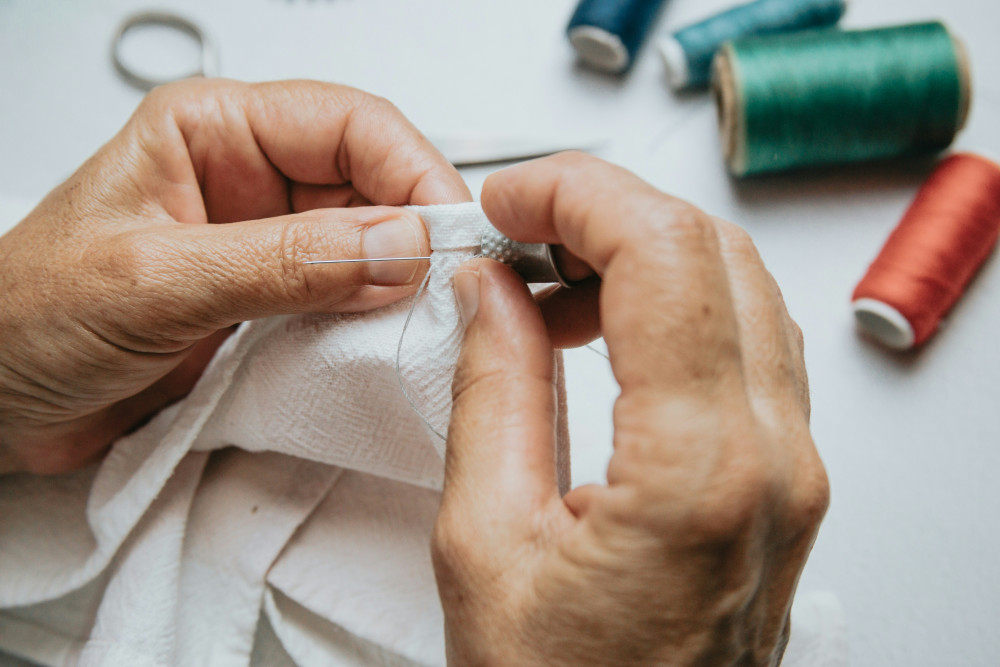
- Needles and thread – cotton, wool, or silk threads each offer different textures.
- Fabric – canvas, linen, or cotton are great choices for geometric designs.
- Pattern transfer tools – use a pencil, transfer paper, or draw directly on the fabric.
Start with simple shapes and build from there. You can sketch freehand or use a ruler and compass for precision. Once your basic design is in place, play with color, stitch type, and layering to make it your own.
Play with Contrast and Texture
One of the joys of freehand embroidery is the freedom to experiment. Try mixing different stitches—like chain stitch, French knots, and backstitch—to add depth and texture. Contrast thick and thin threads, matte and shiny finishes, or bold and neutral colors to create visual interest.
Geometric patterns are perfect for exploring rhythm and repetition. A simple motif can take on new life depending on how you vary the colors or arrange the shapes. Each project becomes a personal interpretation of balance and form.
Finding Inspiration in Art and Design
Many embroiderers draw inspiration from modern art and graphic design, where shapes and lines create harmony and movement. You might look to Bauhaus principles, mid-century modern design, or even the clean geometry of contemporary architecture.
A great way to find ideas is to observe patterns in your surroundings—tile floors, building facades, shadows, or even city skylines. Photograph what catches your eye and translate those visual impressions into thread and fabric. The result will be something both personal and timeless.
Læs også:
Embroidery as a Mindful Practice
Beyond its visual appeal, freehand embroidery offers a calming, meditative experience. The slow rhythm of stitching provides a welcome break from screens and daily distractions. It’s a tactile, mindful process where you can focus on each movement and watch your design gradually come to life.
Working with geometric patterns enhances this sense of order and flow. The repetition of shapes and stitches creates a soothing rhythm that’s as satisfying to make as it is to look at.
Create Something That’s Entirely Yours
The beauty of freehand embroidery lies in its openness—there are no strict rules. You can mix techniques, materials, and styles however you like. Maybe your design ends up sleek and minimalist, or maybe it bursts with color and whimsy.
What matters most is that your personality shines through. When geometric shapes meet freehand embroidery, you enter a creative space where craft and art merge—and every stitch tells a story that’s uniquely your own.
Læs også: