Expand Your Patchwork: Advanced Patterns and Techniques for Experienced Quilters


Expand Your Patchwork: Advanced Patterns and Techniques for Experienced Quilters
Once you’ve mastered the classic squares and triangles, a whole new world of creative possibilities opens up in quilting. For experienced quilters, it’s no longer just about neat seams and perfect points—it’s about challenging yourself with complex patterns, advanced techniques, and personal expression. Here’s how you can take your quilting to the next level.
From Traditional Blocks to Modern Design
Quilting is rooted in tradition, but today’s quilters are pushing boundaries with bold colors, innovative layouts, and unexpected materials. While timeless patterns like Log Cabin and Flying Geese remain beloved, there’s a growing trend toward more graphic, asymmetrical, and modern designs.
Try experimenting with:
- Combining traditional blocks in new ways – let a classic pattern serve as the foundation for a contemporary motif.
- Playing with negative space – use solid fabrics to create contrast and balance in a busy design.
- Exploring color gradients – subtle shifts from dark to light can add depth and movement to your quilt.
Sketching your design—digitally or on paper—before cutting fabric helps you visualize proportions and color relationships, saving time and fabric in the long run.
Advanced Techniques to Elevate Your Craft
Once you move beyond the basics, a range of advanced techniques can expand your creative toolkit. Here are a few that seasoned quilters love:
- Foundation paper piecing – sew directly onto paper templates for unmatched precision in intricate designs. Ideal for stars, angles, and geometric motifs.
- Curved piecing – sewing curves takes patience, but the results are soft, organic, and dynamic. Use plenty of pins and take your time to avoid puckers.
- Appliqué – layer shapes on top of your quilt top using hand or machine stitching. It’s a great way to blend patchwork with pictorial or abstract art.
- Improvisational quilting – set aside the rules and let your intuition guide you. Focus on composition and rhythm rather than perfect alignment.
Mastering multiple techniques allows you to create quilts that are both technically impressive and deeply personal.
Materials and Tools for the Next Level
As your projects become more complex, precision and quality matter more than ever. Make sure your tools and materials support your ambitions.
- Cutting tools: A sharp rotary cutter and a large cutting mat are essential. Consider specialty rulers for curves, angles, and complex shapes.
- Fabric selection: High-quality cotton is a staple, but don’t be afraid to mix in linen, silk, or repurposed textiles for texture and character.
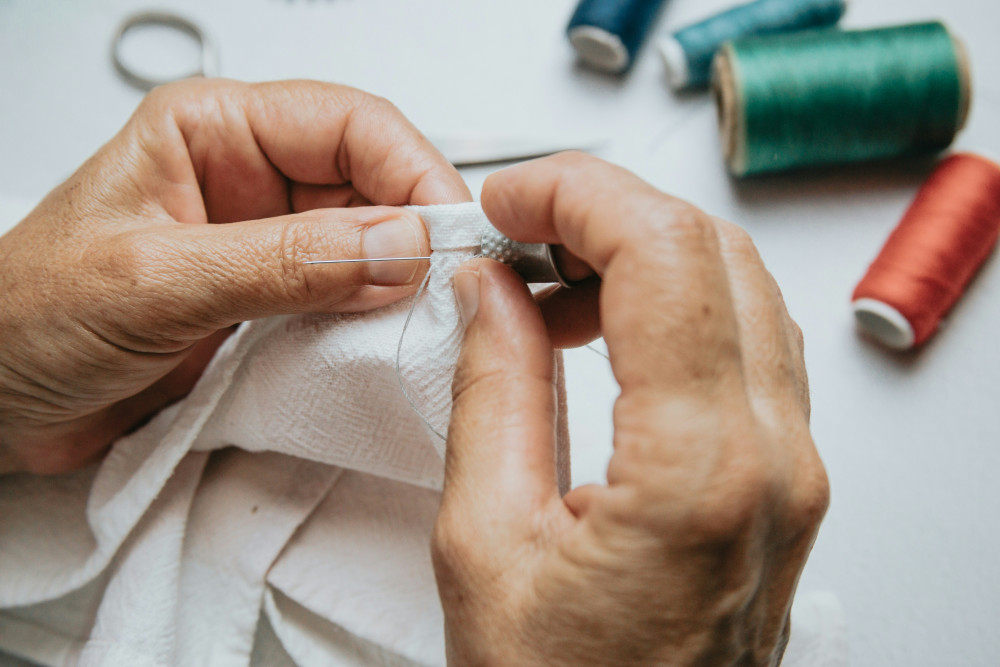
- Thread and needles: Match thread weight to your fabric and use fine needles to minimize visible holes.
- Sewing machine: A machine with adjustable stitch length and free-motion quilting capabilities gives you greater creative control.
Good preparation—washing, pressing, and precise cutting—makes all the difference when working with advanced patterns.
Quilting as an Art Form
For many experienced quilters, a quilt becomes more than a blanket—it becomes a work of art. It’s a medium for storytelling, emotion, and exploration.
Consider:
- Developing themes or narratives within your quilts.
- Using free-motion quilting to add texture, movement, and dimension.
- Exhibiting your work at local quilt shows, art galleries, or national competitions.
When you approach quilting as an art form, you open the door to developing your own voice and style within the craft.
Læs også:




Inspiration and Community
Although quilting is often a solitary and meditative process, the quilting community can be a powerful source of inspiration. Join workshops, local guilds, or online groups where you can share ideas, learn new techniques, and connect with others who share your passion.
Many quilters also draw inspiration from other art forms—architecture, nature, painting, or textile design. The more you explore, the more you can translate those influences into your own creative language.
Create with Confidence and Curiosity
Expanding your quilting practice isn’t just about mastering new techniques—it’s about courage. The courage to experiment, to make mistakes, and to find your own path in a craft that offers endless possibilities. With experience comes freedom—and the joy of creating something that is entirely your own.
Læs også: